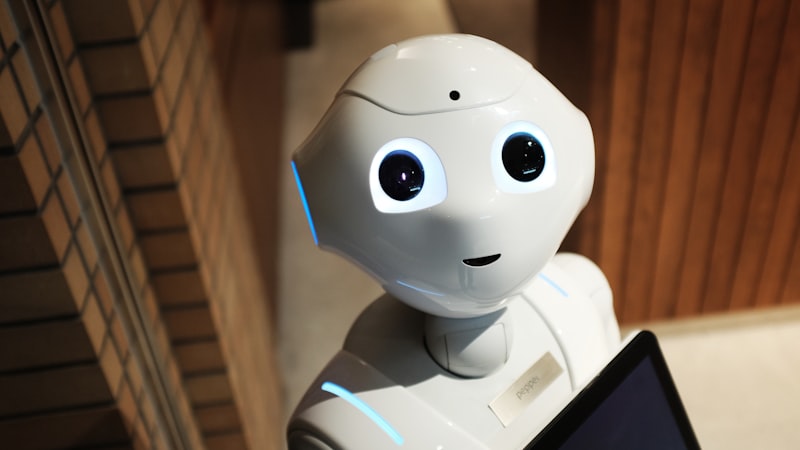
You know what? The intersection of AI and creativity is a lot like a peanut butter and pickle sandwich. At first glance, it seems like a mismatch, but dig a little deeper and you might find something surprisingly intriguing. This is particularly true when we look at the recent Hollywood writers' strike. The tension between human creativity and AI's burgeoning role in content production is as gripping as any blockbuster script.
A Scene from the Writers' Room
Picture this: a dimly lit room filled with crumpled paper and empty coffee cups. Writers are huddled around a table, passionately throwing ideas around. The energy is palpable, almost electric. Now, add a computer to the mix—not just any computer, but one powered by AI. It's suggesting plot twists, generating dialogue, and even proposing entire scenes. This isn't science fiction; it's increasingly becoming a reality.
But why does this matter? Well, the tension between human writers and AI isn't just about who can craft the better script. It's a microcosm of a larger debate: creativity versus automation. Can algorithms truly grasp the nuances of human emotion and storytelling? Or are they merely mimicking patterns found in data?
The Algorithm's Pen: A Blessing or a Curse?
Let's not kid ourselves—AI is already a powerhouse in many industries. From optimizing supply chains to predicting consumer behavior, its capabilities are impressive. In Hollywood, the promise of AI is seen in its ability to analyze past box office hits and predict what could work in the future. Studios like Warner Bros. and Netflix are already leveraging AI to make decisions about which projects to greenlight. According to Variety, AI-driven analytics are used to gauge script popularity even before a single scene is shot.
However, here's where it gets tricky. While AI can handle data with the precision of a master craftsman, can it really replace the soul of storytelling? Writing isn't just about stringing words together; it's about weaving narratives that resonate with audiences on an emotional level. Sure, an AI can suggest a plot twist, but can it understand the irony of a character's journey or the bittersweet nature of a love story gone awry?
Coding Creativity: The Developer's Role
If you're a tech professional or developer, this conversation hits close to home. You're probably familiar with AI's capacity to learn and adapt. After all, isn't that what artificial intelligence is all about? But there's a difference between recognizing patterns and understanding them. Developers behind AI models must grapple with this distinction daily.
Let's break it down. Imagine you're working on an AI model that's supposed to create content similar to a popular TV show. You'll feed it scripts, analyze character arcs, and study dialogue. But here's the catch: how do you teach an AI to understand cultural references or comedic timing? This is where the human touch becomes irreplaceable. Developers must ensure that AI tools complement, rather than replace, human creativity.
The real challenge—and opportunity—lies in merging these two worlds. Just like we discuss full-stack engineering, where developers juggle both front-end and back-end technologies, there's a need for a hybrid approach in storytelling. AI can handle the heavy lifting of data analysis, while writers focus on the artistry.
Hollywood's AI Dilemma: A Case Study
Take Disney, for example, a company that's always been at the forefront of technological innovation. They've integrated AI into their creative processes, using it to animate characters more realistically and even to predict audience reactions. Yet, when it comes to storytelling, they still rely heavily on human creativity.
In fact, during the strike, many writers argued that while AI tools could aid in streamlining production tasks, the essence of storytelling should remain human. According to The Hollywood Reporter, AI might be great for creating content faster, but not necessarily better. Writers worry that over-reliance on AI could lead to homogenized content, devoid of the uniqueness that makes stories memorable.
The Business Angle: Dollars and Sense
From a business perspective, the allure of AI is undeniable. Who wouldn't want to cut costs and speed up production? But here's the paradox: investing in AI for creative processes might save money in the short term but could cost more in the long run if it leads to uninspired content that audiences reject.
Let's look at this from a different angle. Imagine you run a tech company. You're always on the lookout for ways to innovate, right? But you also know that innovation needs a human touch. This is something we've seen in the AI Workflow sector, where integrating AI efficiently requires balancing automation with human insight.
The Final Act: Where Do We Go From Here?
So, what does the future hold for AI in Hollywood? It's not about choosing sides but finding a symbiotic relationship. AI can be a powerful ally in the creative process, offering insights and efficiencies that were previously unimaginable. Yet, it's the human heart that breathes life into stories.
For tech professionals and developers, the takeaway is clear: continue pushing the envelope with AI, but remember that the magic of storytelling lies in its humanity. AI can offer tools, but it's up to us to wield them wisely.
In the end, whether you're writing code or crafting stories, it's about connection. Whether it's connecting lines of code to create a seamless mobile app experience or connecting characters in a narrative that captivates an audience, the goal is the same.
So, next time you think about AI taking over creative jobs, remember the peanut butter and pickle sandwich. It might look odd, but it just might work—if we find the right balance.